Dog Calorie Calculator
Daily calorie target for your dog — resting and active — from weight, activity level, and life stage. Food-agnostic.

How this calculator works
Resting Energy Requirement = 70 * (kg)^0.75; activity factor from NRC 2006 tables.
How this calculator works
Three inputs: body weight, activity level, life stage. RER is computed from weight; activity factor multiplies it; life stage nudges it up (puppies, working dogs) or down (senior adults).
- 1
rer = 70 × (kg)^0.75
Resting Energy Requirement — the calories a dog burns at rest in a thermoneutral environment. The 0.75 exponent reflects that metabolic rate scales to body mass sublinearly.
NRC 2006.
- 2
activeKcal = rer × activityFactor
Activity factor comes from the NRC 2006 reference tables: 1.2 (sedentary neutered adult), 1.4 (typical adult), 1.6 (moderately active), 1.8 (active), 3.0 (working/sporting dog under load).
NRC 2006; AAFCO multipliers.
- 3
stageAdjust = puppy / senior multiplier
Puppies need meaningfully more (up to 3.0× RER during early growth); senior dogs often need slightly less than adult maintenance.
AAHA Life Stage Guidelines 2019.
When to use this calculator
Use this when you want the raw daily energy target in kcal — separate from any particular food. Two common cases: (1) you're comparing foods with different kcal densities, (2) you need a defensible target for a weight-loss or weight-gain plan, and you want to start from the resting baseline and work up.
For prescription or medical diets, follow veterinary guidance; this calculator is for healthy-dog baseline planning.
Frequently asked
Is this the same as the Food calculator?
Close, but different starting points. The calorie calculator gives you the daily energy target in kcal — food-agnostic. The food calculator takes that kcal target and converts it into cups/grams for a specific food with a specific kcal-per-cup density.
What activity factor should I use?
Sedentary dogs (mostly indoor, short walks) sit at 1.2. Most adult pets with one or two daily walks sit at 1.4–1.6. Dogs actively running, swimming, or training every day sit at 1.8–2.0. Working sporting dogs under load can reach 3.0. If uncertain, start at 1.6 and watch body condition.
Do treats count toward the daily target?
Yes. Treats should stay under 10% of daily calories — or you'll erode the maintenance ratio and cause gradual weight gain. On a 800-kcal/day dog, that's roughly 80 kcal of treats.
Related calculators
- Dog age
Dog Age Calculator
The flagship: breed- and size-aware dog-to-human age conversion, built on the UCSD 2019 epigenetic clock.
Open calculator - Weight
Dog Weight Calculator
Ideal adult weight by breed and frame, plus a body-condition-score lookup.
Open calculator - Food
Dog Food Calculator
Daily cup and gram portions by weight, activity level, and life stage.
Open calculator
Related reading
- Pillar guide
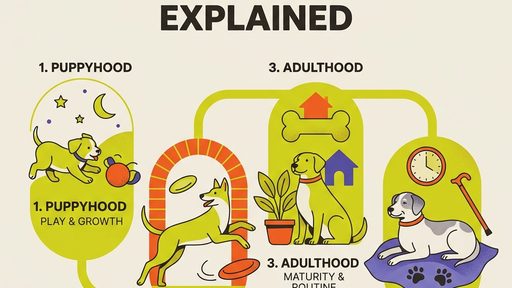
The Six Dog Life Stages, Explained
Puppy to geriatric, per the AAHA 2019 framework — with size-specific thresholds. The terminology every vet uses, translated for owners.
Read guide - Pillar guide

Caring for Aging Dogs, by Breed
The five care domains that shift when a dog enters senior stage — diet, exercise, veterinary cadence, environment, and engagement — adjusted for breed size and genetic load.
Read guide


Sources
The formula and life-stage logic on this page cite the peer- reviewed research and veterinary-organization guidelines below.
- Government · 2006National Research Council — Nutrient Requirements of Dogs and Cats
Source of the RER formula and activity-factor multipliers.
- Industry standardAAFCO — Dog Food Nutrient Profiles
Life-stage energy multipliers referenced on this page.