Senior Dog Calculator
The specific age your breed crosses the senior and geriatric thresholds — not a universal number, because size dictates when aging actually begins.

How this calculator works
AAHA 2019 canine life-stage framework; breed-specific thresholds from Fortney 2012 size curves.
How this calculator works
The senior threshold is a size-category default, optionally refined by breed-specific data when a breed is selected. We use the Fortney 2012 table, which AAHA's 2019 life-stage guidelines aligned with.
- 1
senior = fortney[size].senior
Fortney 2012 publishes the canonical size-category table: toy 9, small 8, medium 7, large 6, giant 5. A toy-breed dog becomes senior four years later than a giant-breed dog.
Fortney WD, Topics in Companion Animal Medicine 2012.
- 2
geriatric = fortney[size].geriatric
The geriatric threshold sits roughly three to four years after senior: toy 13, small 12, medium 11, large 10, giant 8. These are the ages at which wellness exams typically move from annual to biannual cadence.
AAHA Canine Life Stage Guidelines, 2019.
- 3
breedAdjust = data.breed.seniorAgeYears
When a specific breed is selected, we use the breed-level threshold from the breed database (which may be slightly different from the size-category default if the breed has published breed-specific guidance).
dogage.co breed database; AKC breed standards.
When to use this calculator
Use this when you're trying to decide whether your dog has entered the "book a senior wellness exam" zone. The answer is size- and breed-specific, and the guidance is simple: once your dog crosses the senior threshold, your veterinarian should be seeing them roughly twice a year rather than once.
Also useful when you're reading older advice online — a lot of general articles treat "7 years old" as universally senior, but the veterinary framework is much more size-aware than that.
Frequently asked
Why is senior-threshold age different across sizes?
Larger dogs age biologically faster. A 6-year-old Great Dane and a 10-year-old Miniature Poodle are at comparable biological life stages — both squarely senior. The size-category thresholds encode that real biological signal.
What changes when my dog crosses the senior threshold?
Per AAHA 2019: wellness exams typically move to a biannual cadence, senior-panel bloodwork is added, and the conversation with your veterinarian shifts to early-detection screening for the conditions that become more common with age in your breed. No specific medication or diet change is universal — that is a conversation per dog.
Is 'senior' the same as 'geriatric'?
No. AAHA separates them. Senior is the first stage of aging where care priorities shift toward earlier detection and comfort support; geriatric is the later stage where quality-of-life and cognitive support become primary. The gap between them is typically 3–4 years depending on size.
Related calculators
- Dog age
Dog Age Calculator
The flagship: breed- and size-aware dog-to-human age conversion, built on the UCSD 2019 epigenetic clock.
Open calculator - Weight
Dog Weight Calculator
Ideal adult weight by breed and frame, plus a body-condition-score lookup.
Open calculator - Food
Dog Food Calculator
Daily cup and gram portions by weight, activity level, and life stage.
Open calculator
Related reading
- Pillar guide

When Is My Dog a Senior? Size-Specific Thresholds
Senior stage arrives at age 9 for toy breeds and age 5 for giant breeds. The specific threshold depends on size — here is the breakdown used on every dogage.co breed page.
Read guide - Pillar guide
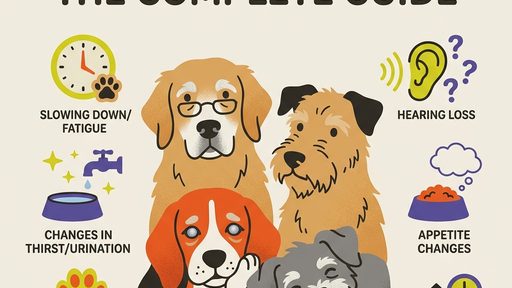
Senior Dog Signs: The Complete Observational Guide
Twelve observable signs that tell you your dog has entered senior stage — grouped by body system, grounded in veterinary research, with specific guidance on when to book a vet visit.
Read guide - Pillar guide

Caring for Aging Dogs, by Breed
The five care domains that shift when a dog enters senior stage — diet, exercise, veterinary cadence, environment, and engagement — adjusted for breed size and genetic load.
Read guide


Sources
The formula and life-stage logic on this page cite the peer- reviewed research and veterinary-organization guidelines below.
- Peer-reviewed · 2012Fortney WD — Implementing a Successful Senior/Geriatric Health Care Program
Size-category senior and geriatric threshold table.
- Veterinary guideline · 2019Creevy KE et al. — 2019 AAHA Canine Life Stage Guidelines
Canine life-stage framework behind the senior and geriatric definitions.
- Veterinary guideline · 2021AVMA — Senior Pet Care Guidelines
AVMA-aligned framing of the senior transition.