Dog Weight Calculator
Ideal adult weight anchored in your dog's breed standard, refined by sex and frame. Use it alongside a body-condition check.

How this calculator works
AKC breed-standard weight range midpoint; BCS scale from the WSAVA Global Nutrition Committee.
How this calculator works
Breed standard → midpoint → sex and frame adjustment → body- condition crosscheck. A straightforward pipeline, with the breed-standard range as the most important input.
- 1
range = akcBreedStandard(breed).weightRangeLbs
Every AKC-recognized breed has a published weight range in its breed standard. That range is the starting point.
American Kennel Club breed standards.
- 2
midpoint = avg(range)
For a Golden Retriever, the AKC range is 55–75 lb; the midpoint, 65 lb, is a reasonable ideal-weight anchor for a medium-framed dog.
AKC.
- 3
sexAdjust = +/- frame offset
Males typically sit toward the top of the breed range, females toward the bottom. Frame (fine / medium / heavy) nudges the estimate within the range by roughly 5–10%.
AKC breed-standard guidance.
- 4
BCS crosscheck
A calculator output is only a number. Pair it with a body-condition score check — ribs easily palpable without pressing, visible waist from above, abdominal tuck from the side.
WSAVA Global Nutrition Committee BCS scale.
When to use this calculator
Use this when you want a defensible target weight for an adult dog — whether you're checking that your dog is in the healthy range, setting a weight-loss goal, or tracking a puppy's projected adult weight.
The number is a starting point. Pair it with a body-condition check; two dogs of the same breed and height can be at very different weights and both be at ideal body condition, because frame and muscle mass differ.
Frequently asked
What if my dog is outside the breed-standard range?
AKC ranges are a guide. Individual dogs can sit outside them due to frame, heritage, or mixed ancestry. The more reliable check is body-condition score: can you feel the ribs easily, is there a visible waist from above, is there an abdominal tuck from the side. A vet visit is the right place to calibrate if in doubt.
Is body condition more important than weight?
In most cases, yes. Two dogs of the same breed and height can weigh quite differently and both be at an ideal body condition — because frame and muscle mass differ. Body condition score is a better day-to-day health signal than the scale alone.
Why doesn't the calculator account for muscle mass?
Muscle mass is hard to estimate without visual or palpation assessment. The calculator gives you the breed-standard anchor; your veterinarian (or a trained eye) can calibrate it to your specific dog's frame and muscle development.
Related calculators
- Dog age
Dog Age Calculator
The flagship: breed- and size-aware dog-to-human age conversion, built on the UCSD 2019 epigenetic clock.
Open calculator - Food
Dog Food Calculator
Daily cup and gram portions by weight, activity level, and life stage.
Open calculator - Calories
Dog Calorie Calculator
Resting and active daily calorie needs, computed from weight and activity factor.
Open calculator
Related reading
- Comparison

Dog Life Expectancy Factors: What Actually Moves the Needle
A ranked accounting of the factors that influence canine lifespan — what's modifiable, what isn't, and which levers the peer-reviewed research supports.
Read guide - Pillar guide
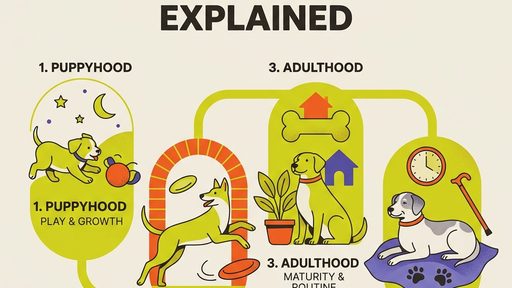
The Six Dog Life Stages, Explained
Puppy to geriatric, per the AAHA 2019 framework — with size-specific thresholds. The terminology every vet uses, translated for owners.
Read guide - Pillar guide

Caring for Aging Dogs, by Breed
The five care domains that shift when a dog enters senior stage — diet, exercise, veterinary cadence, environment, and engagement — adjusted for breed size and genetic load.
Read guide


Sources
The formula and life-stage logic on this page cite the peer- reviewed research and veterinary-organization guidelines below.
- Peer-reviewed · 1997Laflamme DP — Development and validation of a body condition score system for dogs
Origin of the 9-point Body Condition Score system used industry-wide.
- Veterinary guidelineWSAVA Global Nutrition Committee — Body Condition Score scale (1–9)
Body-condition assessment framework referenced on this page.
- Veterinary guideline · 2019AAHA — 2019 AAHA Canine Life Stage Guidelines
Life-stage context that informs how ideal weight shifts with age.